Mobile Phones & Reception on Kilimanjaro
Staying in touch with home is easier than you might think — but it pays to sort out your phone before you fly.
Whether you want to share your summit photos, check in with family, or simply have a phone handy for peace of mind, a little planning goes a long way. Below is a general guide to your options for using your mobile in Tanzania and on the mountain.
Reception on the mountain
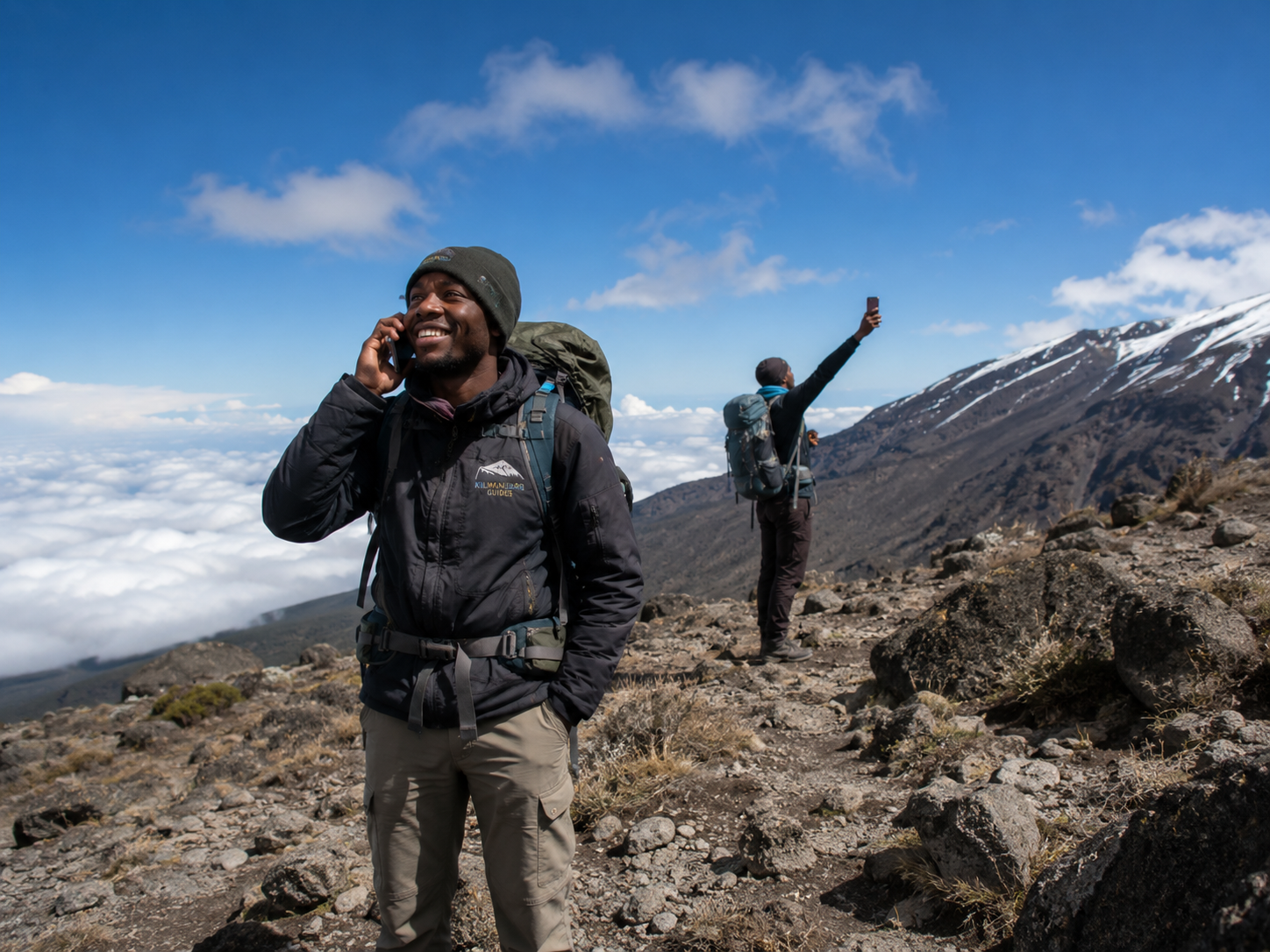
Kilimanjaro has surprisingly good mobile coverage in places — many climbers get a signal at parts of the lower camps and, on a clear day, even from higher up. That said, reception is patchy and can't be relied upon. Expect long stretches with no signal at all, especially at the higher camps and on summit night.
Please don't depend on your own phone for emergencies. Our guides carry mobile phones and an emergency satellite phone, and are contactable 24/7 throughout your climb — staying safe never relies on your personal coverage.
Secret Hint: Keep an eye on the porters and guides when you get to each camp at the end of the day - they know where the best (if any) reception is, so you can follow their lead.
International roaming with your Australian provider
The simplest option is to keep your own number and turn on international roaming. The major Australian providers offer a daily roaming pass: you pay a set fee on each day you actually use your phone overseas, which lets you use an allowance of data, calls and texts on your existing plan.
Telstra — an International Roaming Day Pass (a daily fee with included data, calls and SMS in eligible destinations). telstra.com.au/international-roaming
Optus — international roaming day passes that use your plan's allowances overseas. optus.com.au/mobile/plans/international-roaming
Vodafone — a low daily "roaming" fee to use your included data, calls and texts in many destinations. vodafone.com.au/mobile/international-roaming
Important: not every country is included in these day passes, and the list of eligible destinations changes from time to time. Tanzania is not always covered by a standard day pass — in which case much higher pay-as-you-go rates can apply. Always check your provider's current roaming list, allowances and pricing for Tanzania before you travel.
Data-only eSIMs (e.g. Holafly)
A popular alternative is a travel eSIM — a digital SIM you install on a compatible phone without swapping out your physical SIM. Providers such as Holafly sell data plans for individual countries or regions (including Africa), often with generous or unlimited data allowances.
How it works in a nutshell:
You buy a plan online and receive a QR code by email; scan it to install the eSIM, and it activates when you arrive.
These plans are usually data only — you can't make normal phone calls or send SMS, but you can call and message over the internet using apps like WhatsApp, Messenger or FaceTime.
On most modern phones you can keep your Australian SIM active at the same time, so you still receive calls and texts on your own number (where roaming allows) while using the eSIM for cheaper data.
You'll need an eSIM-compatible, unlocked phone — most recent iPhones and Samsung/Google handsets qualify, but it's worth confirming yours does.
A few handy tips
Use WhatsApp for calls and messages — it works well on limited data and is widely used in Tanzania.
Keep your phone in flight mode (with Wi-Fi/data on only when you need it) to save battery and avoid surprise charges.
The cold drains batteries quickly at altitude — bring a power bank and keep your phone warm inside your jacket or sleeping bag.
Download anything you'll want offline (maps, music, playlists) before you set off.
Enable usage alerts or usage limits on your mobile phone plan, in case something goes wrong and you use more data than you expect - avoid bill shock!